游九寨沟记
七月时节,我们来到了九寨沟,从酒店走到景区门口,沿途有山岭夹绕,不高的地方便有了云雾,仿佛自身已在仙境。检票进去后乘坐大巴车一路游览到了原始森林,沿途经过镜海,惊为天人,早晨的太阳将金黄的光辉毫无保留的倾泻在湖面上,波澜不惊的镜海顿时熠熠生辉,波光粼粼,大山在湖面上的倒影宛若金顶;阳光不多时便被云雾截断,镜海又恢复了深沉,水波不兴,亘古未变,深沉地等待下一次的绽放。
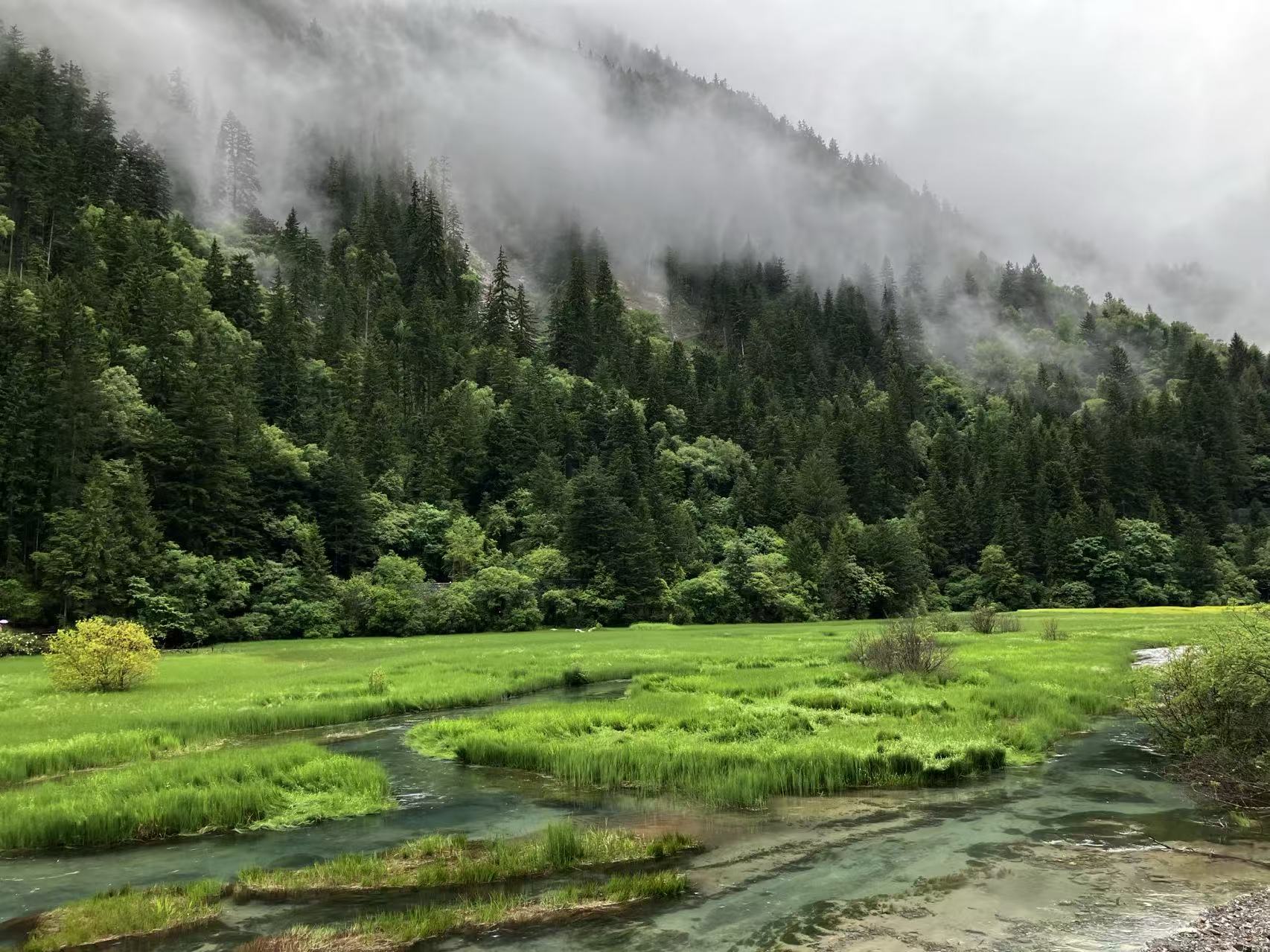
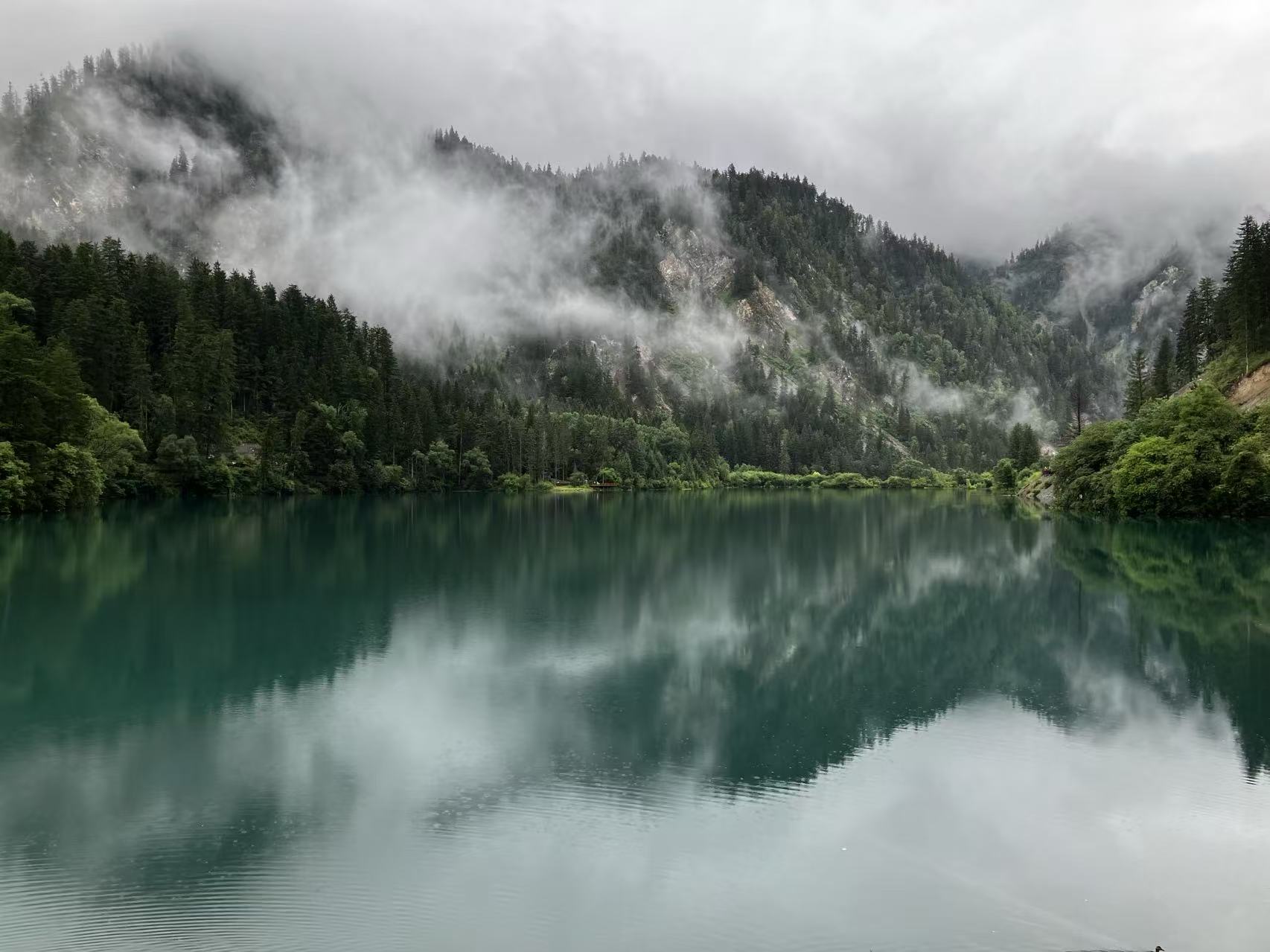
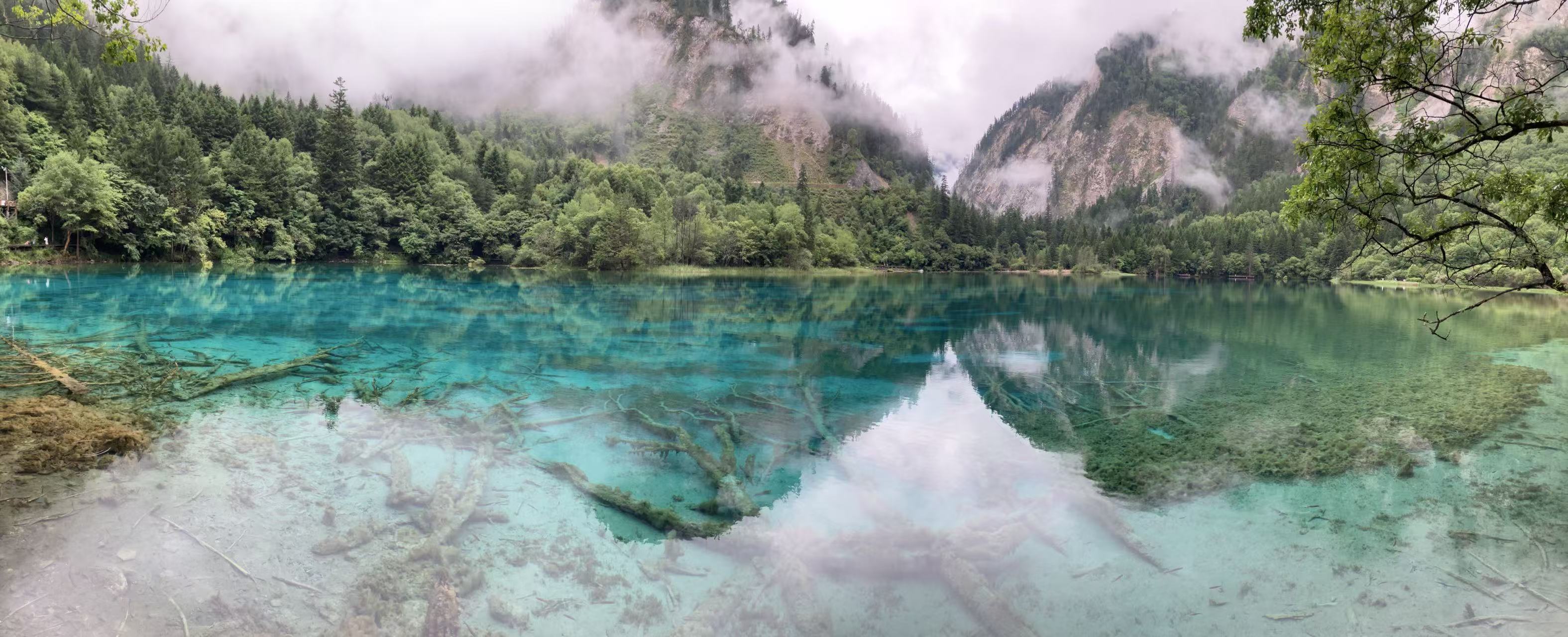
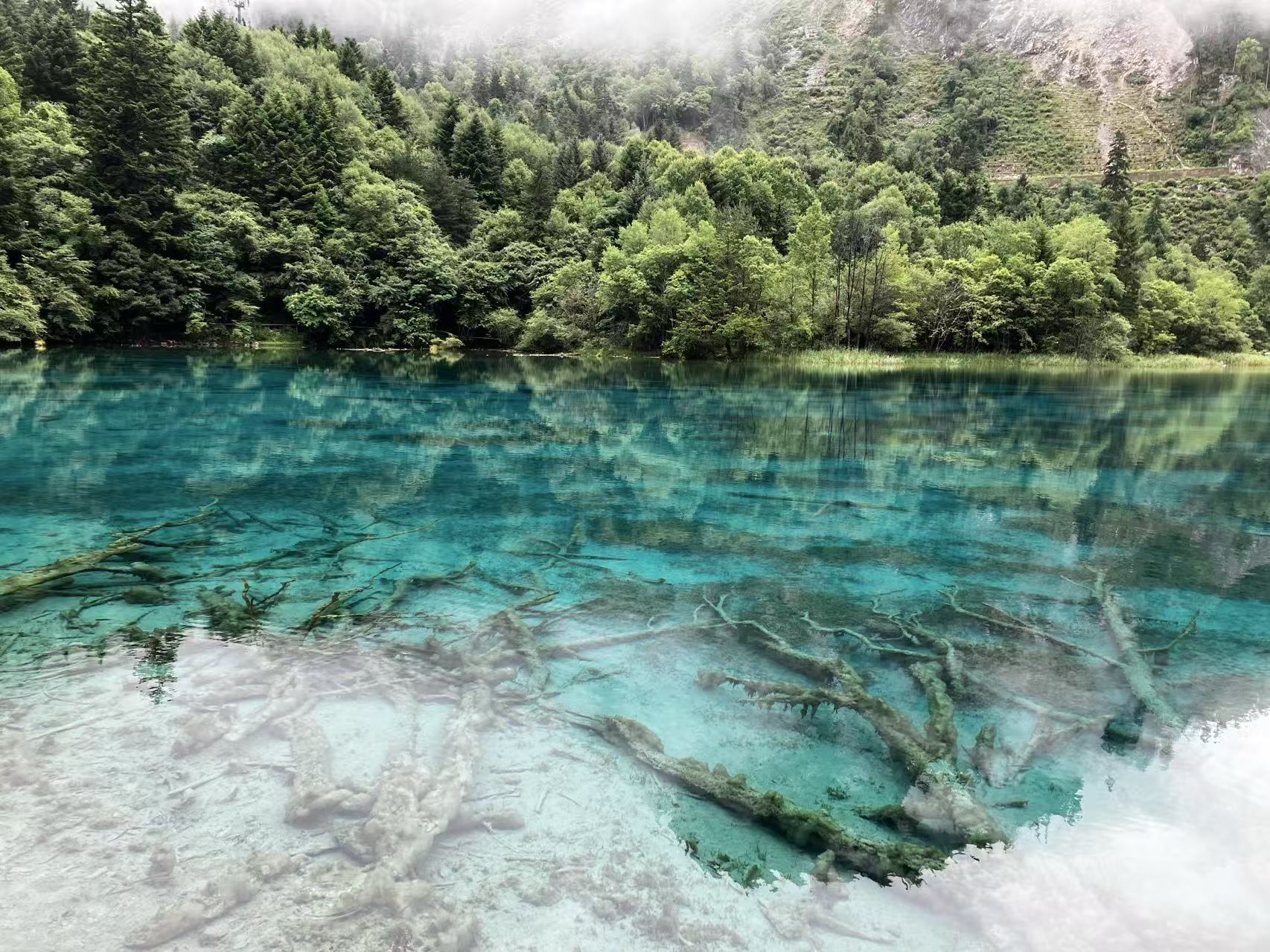
我们从原始森林一路往下,途径箭竹海、熊猫海、五花海,其中以五花海最为惊艳,当地人将湖成为海子。湖面清澈见底,鱼群清晰可见,便如柳宗元的《小石潭记》中所述,“潭中鱼可百许头,皆若空游无所依,日光下澈,影布石上”。除了鱼群,还有沉木,听游人所说,这些枯木由于表层覆了许多钙物质,以至数十年不腐,也就是说,这些枯木年纪可能比我还大,不由惊奇,但转念又想,在其沉湖之前便已在这片土地上扎根已久,又怎么敢说我会比它年长呢?我对不朽的树木感到惊奇,却忽略了它沉湖前的岁月,终究是执着于了浮华。我们来的不是时候,据说五花海在秋季最为艳丽,湖面五光十色,宛若瑰宝,而夏天的五花海只呈现了蓝绿之色,但对我来说也是绚丽非常了。说完了湖,也该说说山了,九寨沟的山好似鲜花下的绿叶,专门为衬托这些海而生的,而海子没有了高山环绕,也就像鲜花单独盛开,虽说艳丽,但总觉得缺少了些许韵味。海子旁的大山,往往是秀丽的,不同于名山俊峰,它缺少了那种直插云霄的锐气与磅礴气势,它与云的关系更像是相伴而生,云雾缭绕,半遮半掩,只留些许翠绿映入湖中,好似害羞俊秀的姑娘盘坐湖畔。山与水的结合向来都是中华文明审美上的钟爱,无数文人墨客在此挥洒多少文章,可惜九寨沟深处巴蜀大山之中,少有人至,要不世间将会留下多少雄文。
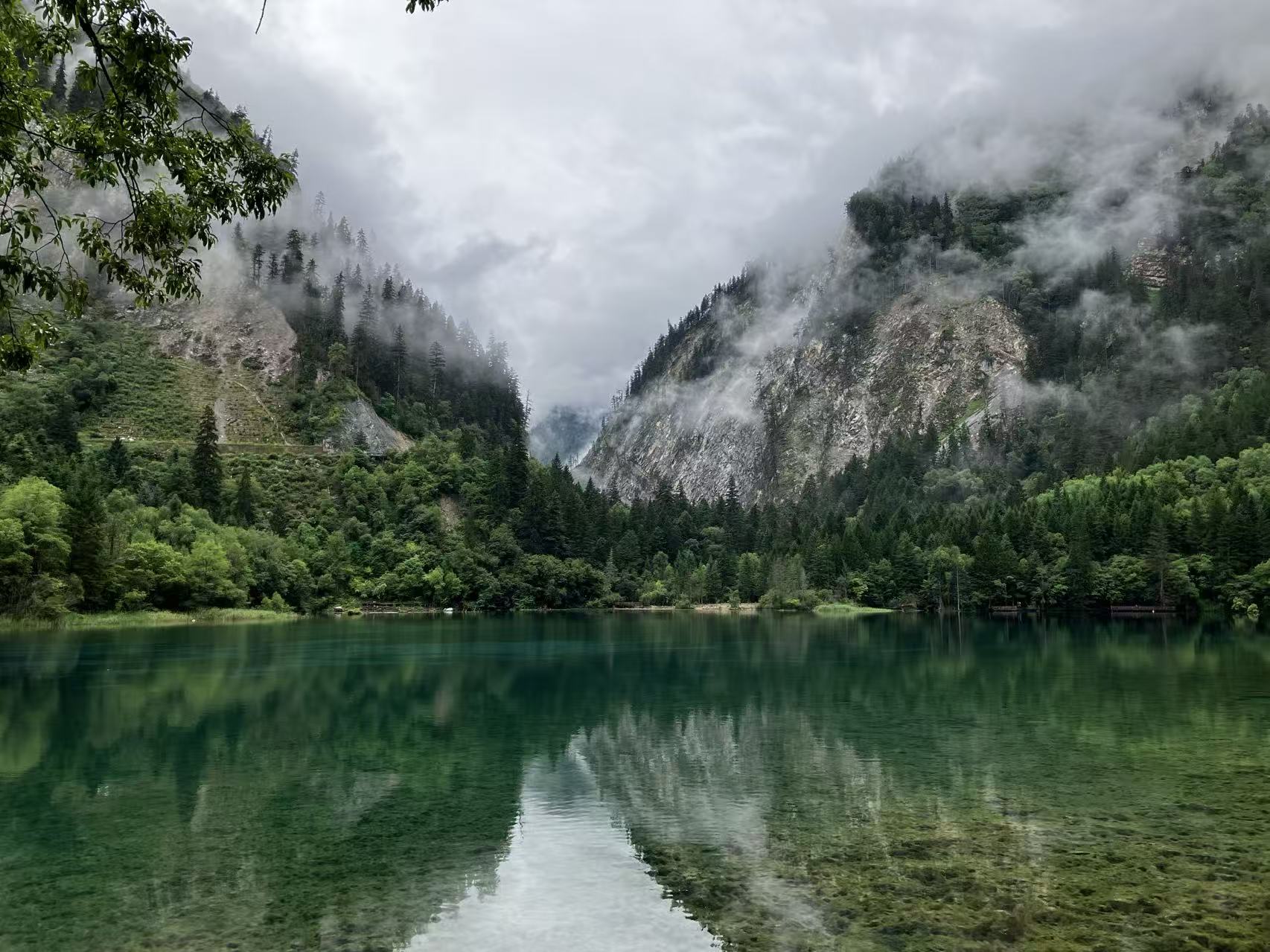
一路下来已是疲惫,中午稍作休息便前往另一条路,乘坐大巴直达长海,刚到观景台,便被扑面而来的壮景扫清了困意,这是何等的壮丽景观,三山环绕,其中便是旷远的长海,一眼望不到海的源头,一眼望不到山的峰顶,水面映照着群山的倒影,深邃的望不到底,即便是风雨同至,也不能掀起微微波澜,天地间好似都安静了下来,微风拂过,树木微微摇晃,才让我从这宁静的氛围中清醒过来。
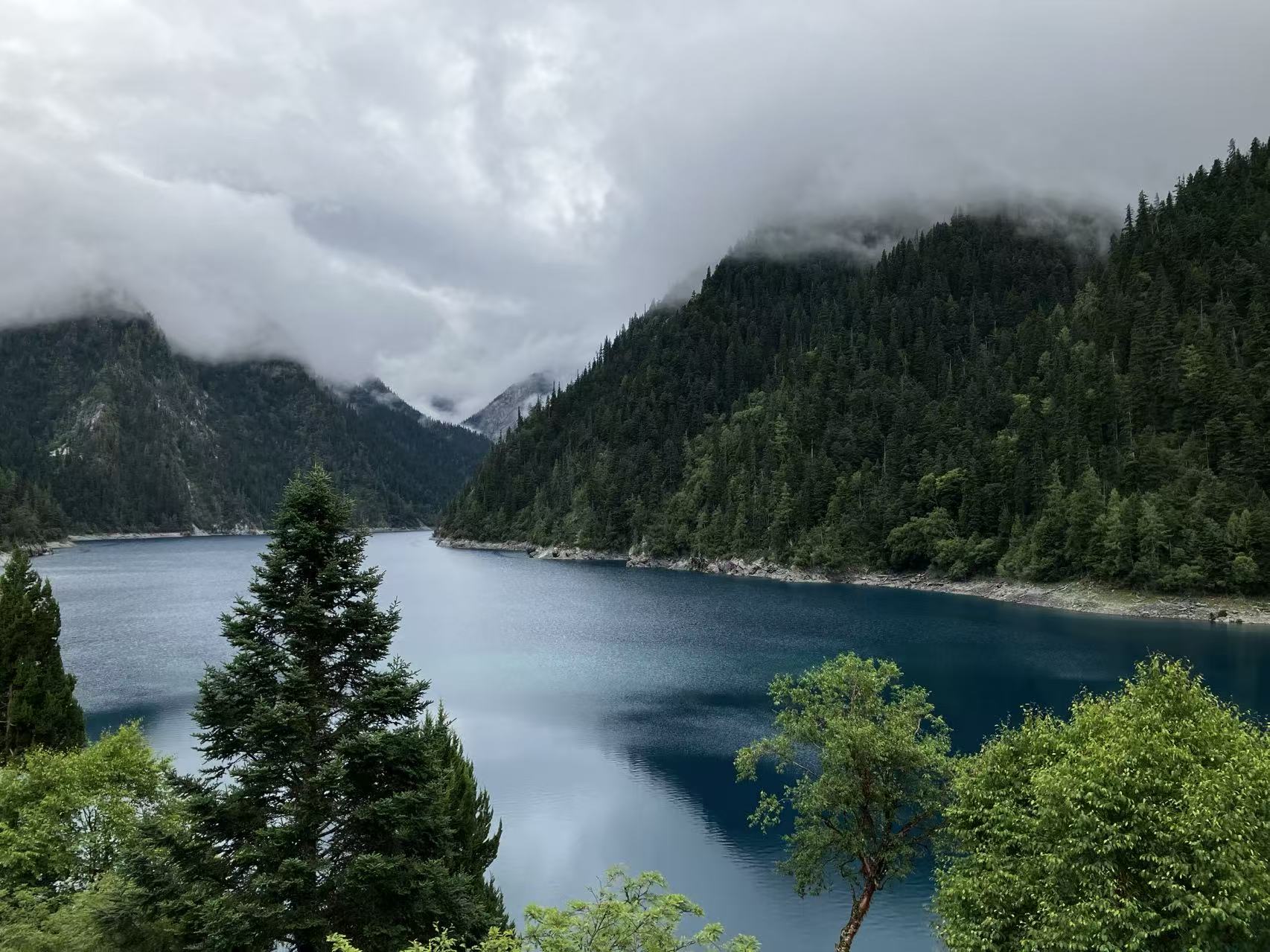
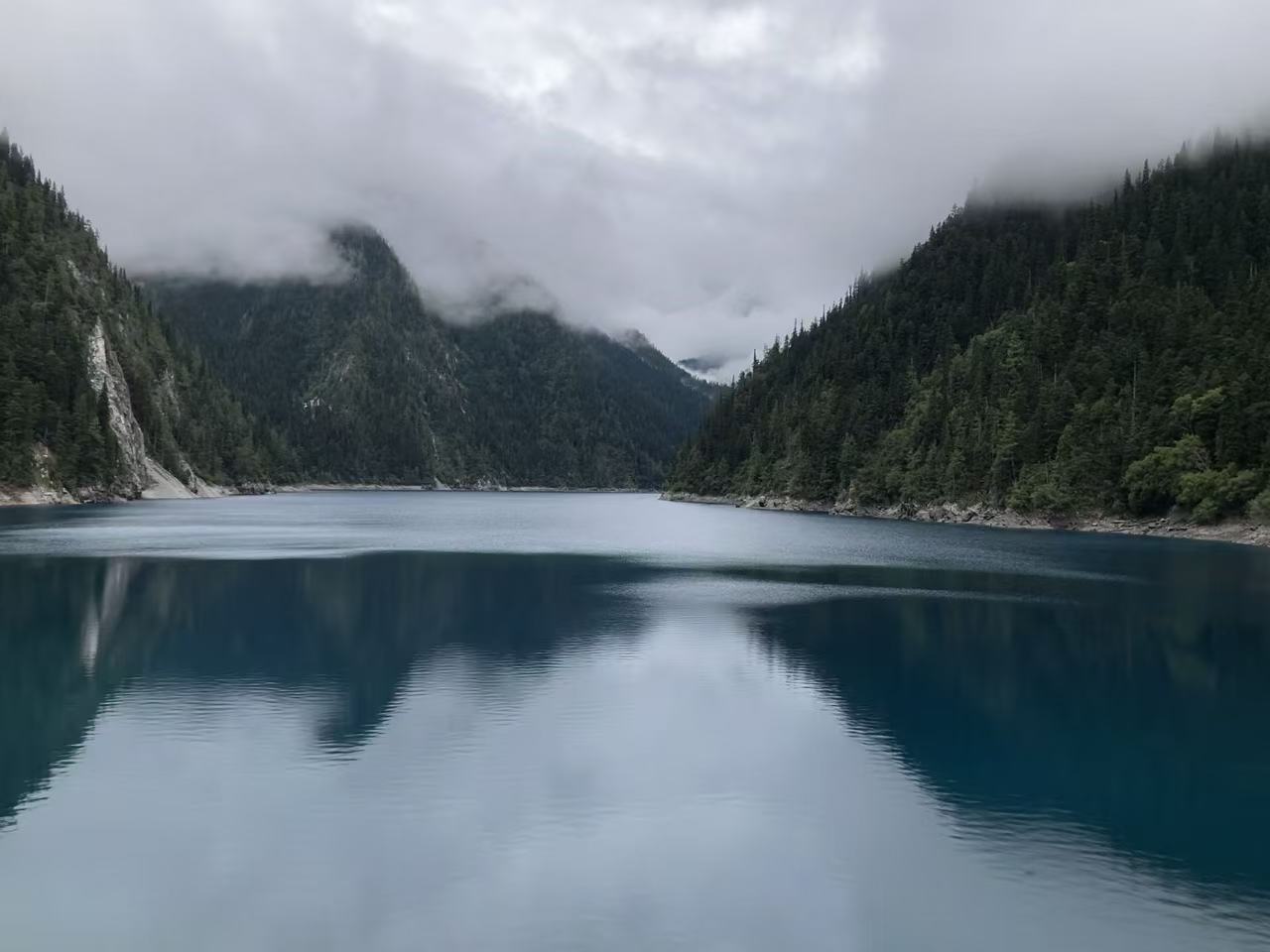
从长海往回走,一路上的景色也很秀丽,但也许是审美疲劳了,没了起初那么多兴致,一路走一路拍就到了门口,返回了酒店。在归程中,我久久不能忘怀九寨沟的景色,这一回去,下一次再看到不知是何年何月了,这是一种什么感觉?惋惜?留恋?好似幸会知己好友但又匆匆分别,江湖再见又不知在何时何地,我们一行人是毕业旅行,也正如此时此刻,旅行结束后再相聚又是何时何地呢?多年后大家是否还如此刻般的洒脱与自信,再次相见时能否可以“一壶浊酒喜相逢,古今多少事,都付笑谈中”。我不禁想起苏轼在《赤壁赋》中的感慨,“逝者如斯,而未尝往也;盈虚者如彼,而卒莫消长也。盖将自其变者而观之,则天地曾不能以一瞬;自其不变者而观之,则物与我皆无尽也,而又何羡乎!且夫天地之间,物各有主,苟非我之所有,虽一毫而莫取。唯江上之清风,与山间之明月,耳得之而为声,目遇之而成色,取之无禁,用之不竭。是造物者之无尽藏也,而吾与子之所共适”。天地之间雄伟壮丽者无数,我又如何能将其随身携带,只供我一人独享呢?人生有限,我又如何能在美好的时光停下,止步不前呢?枯木沉湖,但已无根,如何称得上不朽呢?哀吾生之须臾,羡长江之无穷。挟飞仙以遨游,抱明月而长终。知不可乎骤得,托遗响于悲风。终其一生想要寻得仙人般的逍遥,却抱憾于短暂的生命,这如何能寻得真正的逍遥,是故,饮茶一杯,继续睡大觉耳。
Travels in Jiuzhaigou
In July we came to Jiuzhaigou. Walking from the hotel to the entrance, mountains closed in on either side, and before we had climbed far there was already cloud and mist, as though we were standing in some immortal realm. Once our tickets were checked we took the park bus all the way up to the primeval forest, passing Mirror Lake on the way — and it took my breath away. The morning sun poured its golden light unstintingly onto the water, and the lake, which had been utterly still, suddenly glittered and shone, wave upon wave of light; the reflection of the great mountain lay on its surface like a golden summit. Before long the sun was cut off by cloud and mist, and Mirror Lake returned to its deep quiet: not a ripple, unchanged since ancient times, waiting gravely for its next unfolding.
We walked down from the primeval forest, passing Arrow Bamboo Lake, Panda Lake and Five-Flower Lake, of which Five-Flower Lake was the most astonishing. The local people call the lakes haizi — “sons of the sea”. The water was so clear that the bottom showed and the shoals of fish were plainly visible, just as Liu Zongyuan described in A Small Stone Pool: “A hundred fish or so in the pool, all seeming to swim in emptiness with nothing to lean on; sunlight pierces to the bottom, their shadows cast upon the stones.” Besides the fish there was sunken wood: the visitors said these dead trees had been coated with so much calcium that they had not rotted in decades — in other words, these logs might be older than I am. I was astonished, but then I thought again: before they sank into the lake they had already been rooted in this land for a long time, so how could I presume to say I am older than they are? I marvelled at the immortality of the trees while overlooking the years they had lived before sinking — in the end I was clinging to mere outward show. We had not come at the right time: they say Five-Flower Lake is at its most gorgeous in autumn, its surface in five colours and ten hues like a jewel, whereas in summer it showed only blue and green — yet to me that was brilliance enough. And having spoken of the lakes, I should speak of the mountains too. The mountains of Jiuzhaigou are like the leaves beneath a flower, made expressly to set off these seas; and the haizi, without mountains around them, would be like a flower blooming alone — brilliant, yes, but somehow lacking in charm. The great mountains beside the lakes are usually delicate: unlike famous peaks, they lack that spirit of piercing the clouds, that sweeping grandeur. Their relation to the clouds is more like companionship — cloud and mist winding about them, half covering, half revealing, leaving only a little green to fall into the lake, like a shy and handsome girl sitting cross-legged at the water’s edge. The union of mountain and water has always been what Chinese civilisation loves in its aesthetics; countless men of letters have poured out their writing here. A pity that Jiuzhaigou lies deep in the mountains of Ba-Shu, where few come — otherwise how many fine essays the world would have.
By the time we had come all the way down I was tired. After a short rest at noon we set off along the other route, taking the bus straight to Long Lake. The moment we reached the viewing platform, the grandeur that met us swept away all sleepiness. What a magnificent sight: three mountains encircling it, and within them the vastness of Long Lake — you cannot see where the water begins, nor where the peaks end; the surface mirrors the reflection of the ranges, so deep you cannot see the bottom. Even if wind and rain came together they could not raise the slightest ripple; between heaven and earth everything seemed to fall silent. A breeze passed, the trees swayed a little, and only then did I wake from that tranquil atmosphere.
Walking back from Long Lake, the scenery along the way was lovely too, but perhaps my eye was tired of beauty and I had lost the first flush of enthusiasm; walking and photographing, I reached the gate and went back to the hotel. On the journey home I could not get Jiuzhaigou out of my mind. Once I leave, who knows in what year or month I shall see it again. What kind of feeling is this? Regret? Reluctance? It is like the good fortune of meeting a kindred friend and then parting in haste, not knowing when or where in the world we shall meet again. Our group was on a graduation trip — and so it is with this very moment: once the trip is over, when and where shall we gather again? Years from now, shall we still be as free and confident as we are now? When we meet again, shall we still be able to say, as the old poem has it, “A pot of cloudy wine, joy at meeting; how many things, ancient and modern, are given over to laughter and talk.” I cannot help thinking of Su Shi’s lament in the Red Cliff Rhapsody: “That which passes is like this, and yet it never goes; that which waxes and wanes is like that, and yet it neither increases nor decreases. If you look at it from the side of change, then heaven and earth could not last even a moment; if you look at it from the side of what does not change, then things and I are both without end — so what is there to envy? Moreover, within heaven and earth each thing has its own master; if it is not mine, then not a hair of it may I take. Only the clear breeze on the river and the bright moon in the mountains: the ear receives them and they become sound, the eye meets them and they become colour; there is no ban on taking them, no end to their use. This is the inexhaustible storehouse of the Creator, and what you and I may enjoy together.” Between heaven and earth there are countless magnificent things — how could I carry them on my person, for my enjoyment alone? Life is limited — how could I halt in the good times and refuse to go on? The dead wood sank into the lake, but it has no roots now; how can that be called immortality? “I grieve that my life is so brief, I envy the endlessness of the Long River. I would ride the flying immortal and roam abroad, hold the bright moon and last forever. Knowing this cannot be seized at once, I entrust my lingering echo to the sad wind.” To spend one’s whole life seeking the freedom of the immortals, yet to lament a life too short — how then is true freedom ever to be found? And so: a cup of tea, and on with a good long sleep.
“A Small Stone Pool” (小石潭记) — by Liu Zongyuan (773–819).
“Red Cliff Rhapsody” (赤壁赋) — by Su Shi (1037–1101).
The line “A pot of cloudy wine, joy at meeting” is from “Immortals by the River” (临江仙) by Yang Shen (1488–1559), which opens the Ming novel Romance of the Three Kingdoms.